⚡ Quick Answer
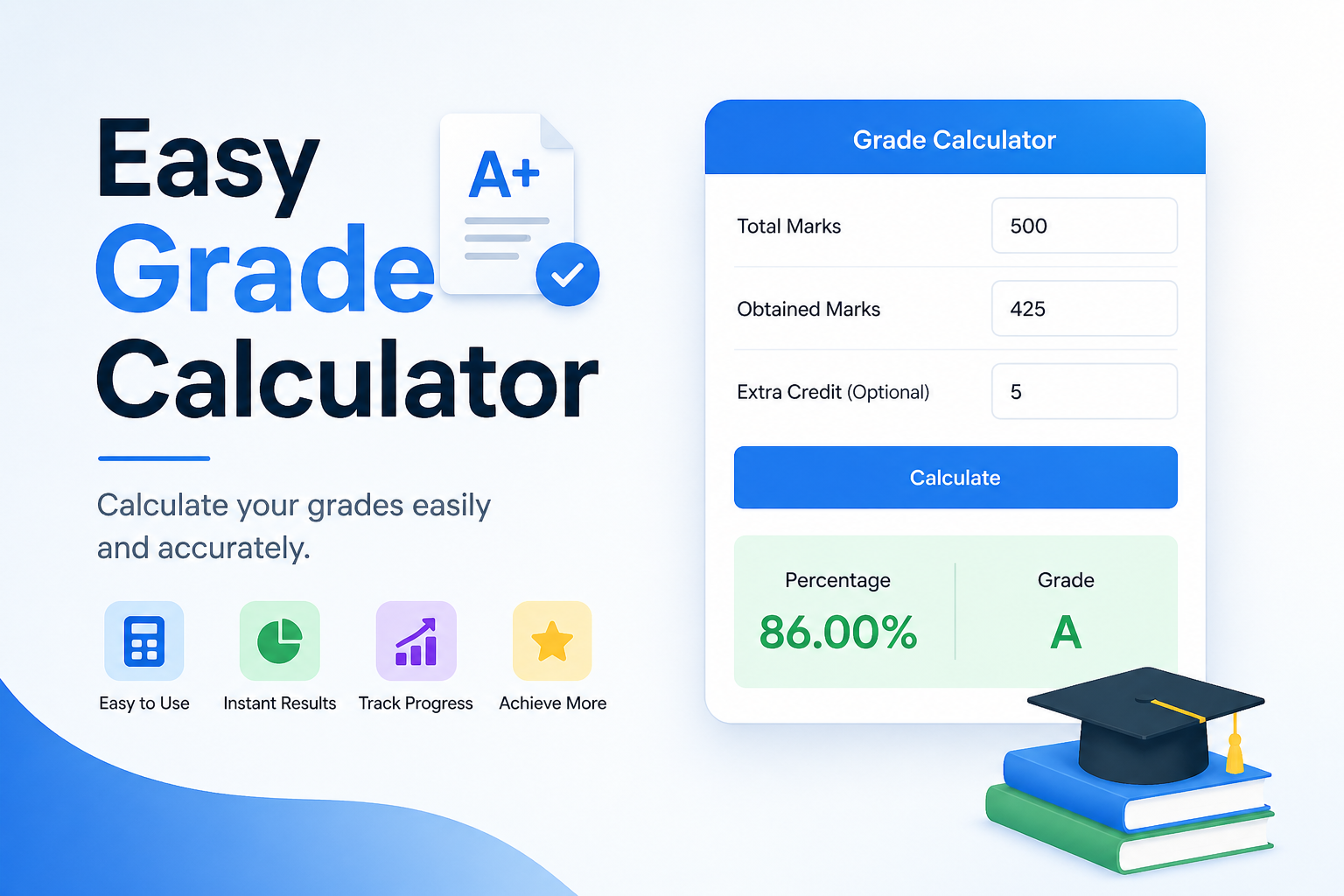
To find a grade from marks: divide obtained by total, multiply by 100. 42 out of 50 = 84% = B. To find a grade from questions: subtract wrong answers from total, divide by total, multiply by 100. 18 correct out of 20 = 90% = A−. On the standard US scale — 90%+ is an A, 80–89% is a B, 70–79% is a C, 60–69% is a D, below 60% is an F.
Free EasyGradeCalculator — Know Your Score Before It Knows You
Here's a fact most students never act on: the difference between a B and an A is usually 4–5 marks. Not weeks of extra study. Just knowing where you stand early enough to do something about it.
And for teachers — you shouldn't need a formula, a pen, and 40 minutes to grade a class stack. A good grade calculator for teachers should let you enter total questions, mark wrong answers as you go, and move to the next paper in seconds. That's exactly what the tools on this page do.
Whether you're checking a quiz score between classes, figuring out what you need on your final exam, or grading 30 papers on a Sunday night — enter your numbers above and get the answer instantly. No ads interrupting your result. No sign-up. No catches.
What Are You Trying to Figure Out?
Pick the situation that matches yours — and go straight to the right tool. No browsing required.
All Nine Free Tools — One Place, Every Situation
From a single quiz score to a full four-year GPA — we've built a dedicated tool for each situation rather than cramming everything into one complicated form.
🧮
Grade Calculator
Marks or questions — converts any raw score into a percentage and letter grade instantly.
🎓
GPA Calculator
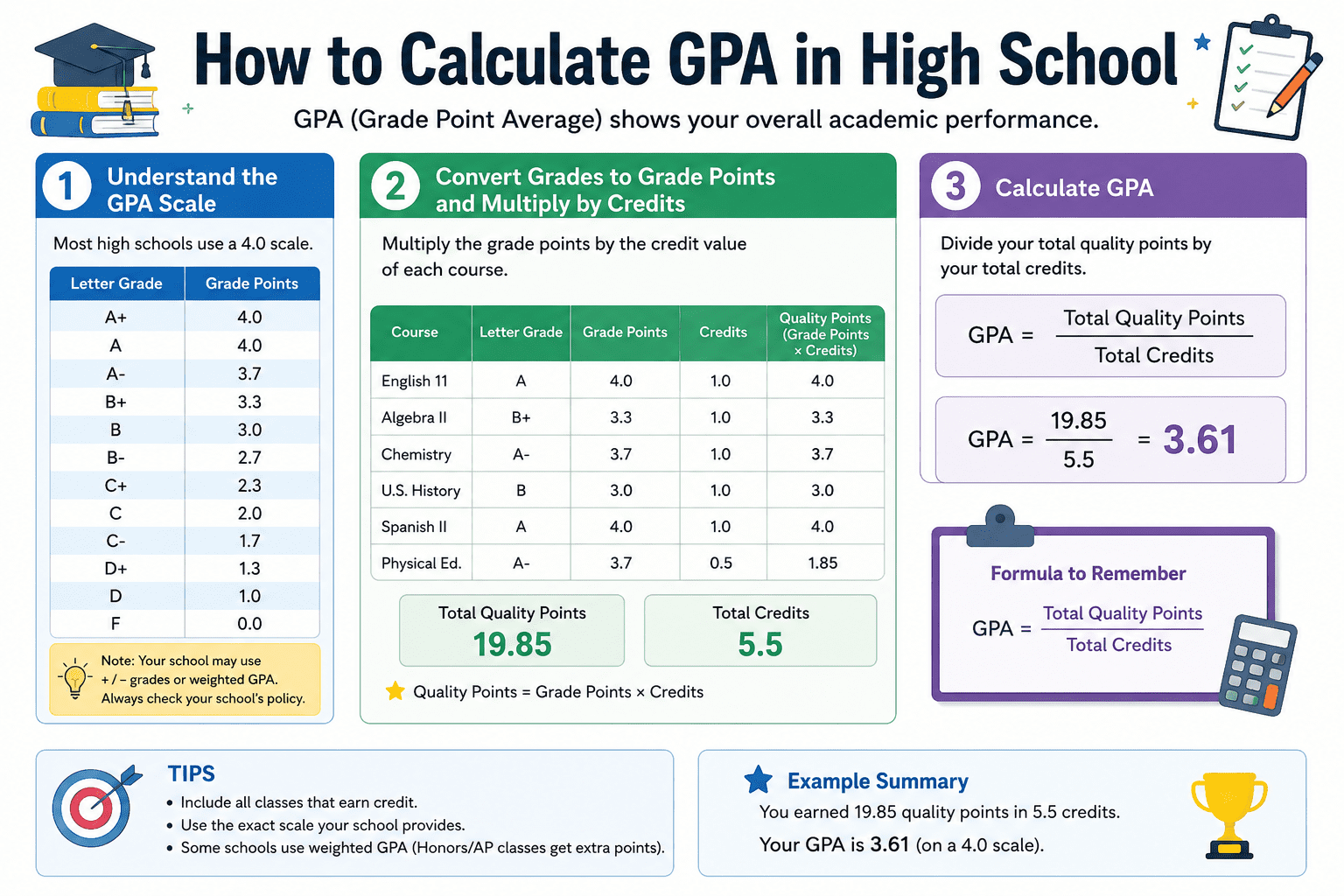
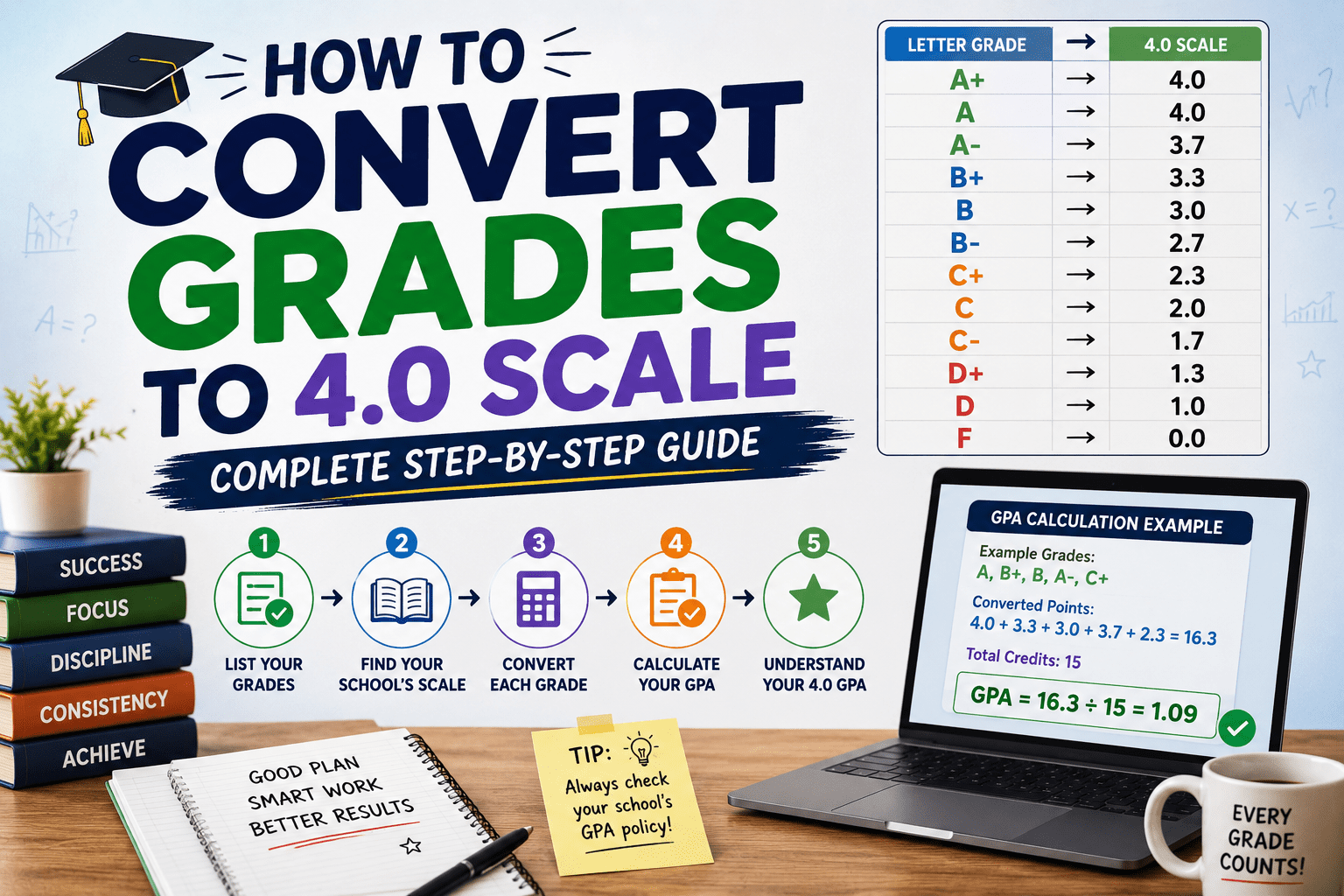
Letter grades + credit hours → your GPA on the 4.0 scale. High school and college.
📊
Cumulative GPA Calculator
Multiple semesters combined into one overall GPA. Supports 4.0, 5.0, and 10.0 scales.
🎯
Final Grade Calculator
What do you need on your final to pass — or hit a target? Enter current grade + final weight.
⚖️
Weighted Grade Calculator
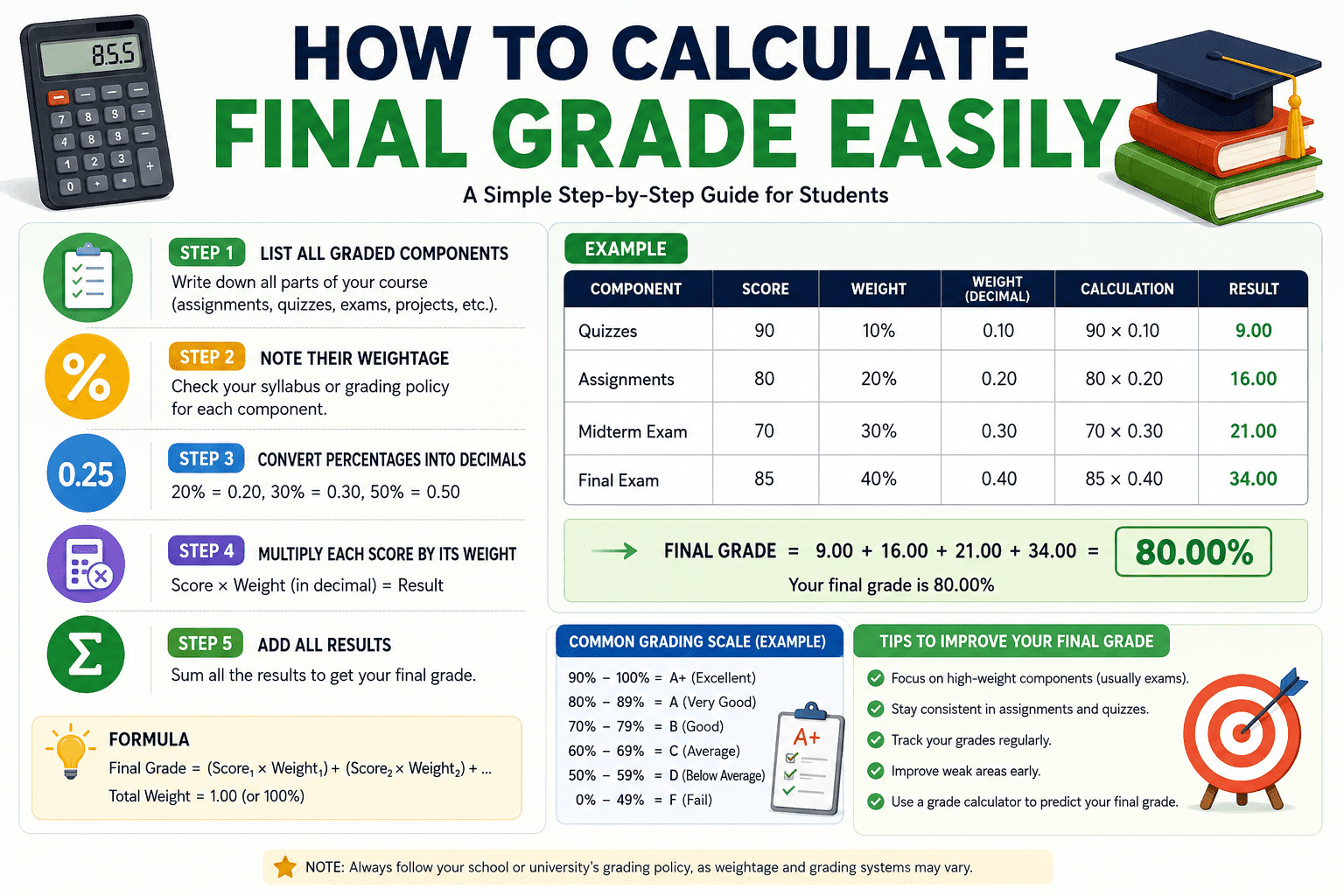
When assignments carry different weights — homework, midterms, projects, finals — this gives you the true course average.
✅
Easy Grader
Free grading calculator for teachers — enter total questions, tap wrong answers, get the full score chart. Faster and more accurate than an EZ grader chart on paper.
📝
Test Grade Calculator
Quiz, exam, or test score — enter number correct and total questions, get your percentage and letter grade.
📈
Average Grade Calculator
Multiple assignments or subjects — find your running average across all of them at once.
🏫
Middle School GPA
Built for middle school grading systems. Students and parents can track academic standing well before high school applications begin.
The Math Behind Every Grade (It's Simpler Than You Remember)
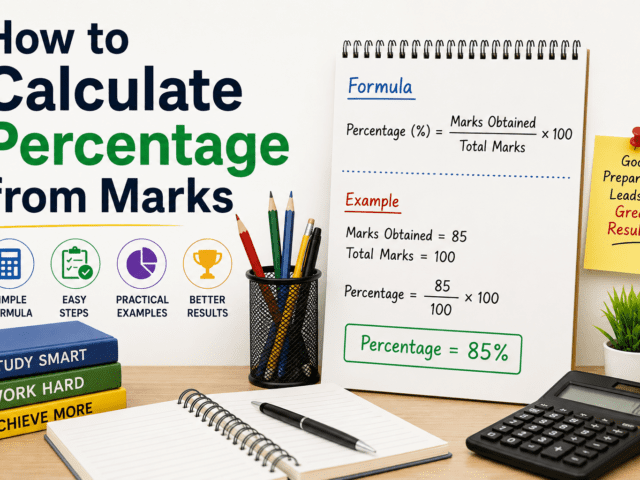
Every grade percentage comes from the same two-step calculation. You learned it in school. You forgot it. Here it is again — permanently:
// When you have marks
Grade % = (Obtained Marks ÷ Total Marks) × 100
→ 42 ÷ 50 × 100 = 84% = B
// When you have number of questions
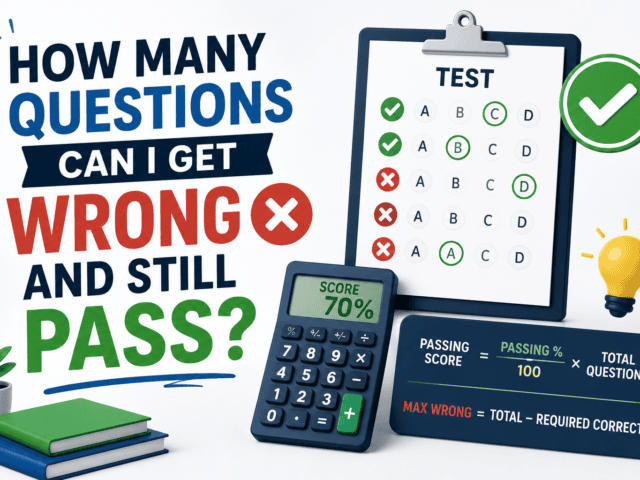
Grade % = (Correct Answers ÷ Total Questions) × 100
→ 18 ÷ 20 × 100 = 90% = A−
That's the entire calculation. The tools above apply it automatically — so you get your letter grade, pass/fail status, and score comparison in one step instead of three.
For more complex situations — like finding what score you need to reach a target grade, or calculating a weighted average across multiple assignment categories — each has its own dedicated tool linked in the grid above.
US Grading Scale — Letter Grades, Percentages, and What They Actually Mean
Ninety percent of US schools use some version of this scale. Understanding where your percentage falls tells you more than just a letter — it tells you what academic doors are open or closed at that score.
| Percentage |
Letter |
4.0 GPA |
What It Opens Up |
| 97–100% |
A+ |
4.0 |
Dean's List, top scholarships, Ivy-level admissions |
| 93–96% |
A |
4.0 |
Honors programs, merit scholarships, competitive grad school |
| 90–92% |
A− |
3.7 |
Strong grad school applications, most scholarship thresholds |
| 87–89% |
B+ |
3.3 |
Most graduate programs, competitive job applications |
| 83–86% |
B |
3.0 |
Above the national college average — meets most academic standards |
| 80–82% |
B− |
2.7 |
Good standing — 8 points from the A range |
| 77–79% |
C+ |
2.3 |
Satisfactory — 3 points from a B− |
| 73–76% |
C |
2.0 |
Passing — minimum acceptable at most institutions |
| 70–72% |
C− |
1.7 |
Just above D — focus here to move up a full grade band |
| 60–69% |
D |
1.0 |
Minimum pass at most schools — retake if your program requires a C |
| Below 60% |
F |
0.0 |
Does not meet passing requirements — retake the course |
Who Uses These Tools — and How
🎓
Students
The most common use: checking a single test score. You got your paper back with 38/50 marked on it. You want to know if that's a B or a C — and how far it is from the next grade up.
The second most common use: finals panic. You know your current standing in a course and you need to calculate exactly what score on the final keeps you passing — or gets you to the grade you need for your GPA.
The national college GPA average is 3.15 (about 83%). Students who track their scores throughout the semester consistently end up 0.3–0.4 GPA points higher than those who check in only at the end.
📋
Teachers
Picture a Sunday evening. Thirty test papers on the table. You need a teacher grade calculator that works as fast as you do — not one that makes you re-enter the total for every single paper.
Our easy grader for teachers solves this exactly. Set your total question count once. For each paper — just add wrong answers. The score updates live. Hit reset for the next student. It's a quick grade calculator built around the way teachers actually work: fast, sequential, no recalculating.
For courses with weighted categories — homework, quizzes, projects, finals — the Weighted Grade Calculator handles the full distribution automatically.
👨👩👧
Parents
Your child brings home a test with "38/50" written at the top. You know it's not perfect but is it a B? A C? Good enough? Something to worry about?
Enter 38 and 50 into the Grade Calculator and you know immediately: 76% — a C. Passing, average, but with clear room to improve. You now have a real number to talk about — not just a feeling.
For ongoing tracking, the Middle School GPA Calculator gives parents a full academic picture — not just one test result in isolation.
🌍
International Students
The tools work for any marking system worldwide. Pakistan (Matric/Inter/O-Levels), India (CBSE/State boards), UK, Canada, Australia — just enter obtained marks and total marks. The percentage and letter grade display instantly.
Minimum passing marks vary significantly by system — 33% in Pakistan and India, 40% in the UK, 50–60% in Canada and Australia, 60% in the US. Our tools let you set any custom passing threshold so the pass/fail result reflects your actual system — not a US default.
For GPA conversion, the Cumulative GPA Calculator supports the 4.0, 5.0, and 10.0 scales — covering both US and South Asian university systems in one tool.
Marks, Percentage, Letter Grade, GPA — What's Actually Different?
These four terms describe the same academic performance at different levels of abstraction. Understanding the difference helps you use the right tool for the right question.
Marks
Your raw score
The number written on your paper. 42 out of 50. Tells you how many you got right — but can't be compared across tests with different totals.
Percentage
Normalized score
Your mark converted to a number out of 100. 42/50 = 84%. Now you can compare a chemistry test out of 60 with a history test out of 80 — same scale.
Letter Grade
Categorical label
A simplified label for your percentage band. 84% = B. Appears on report cards and transcripts — communicates performance level without showing the raw number.
GPA
Cumulative average
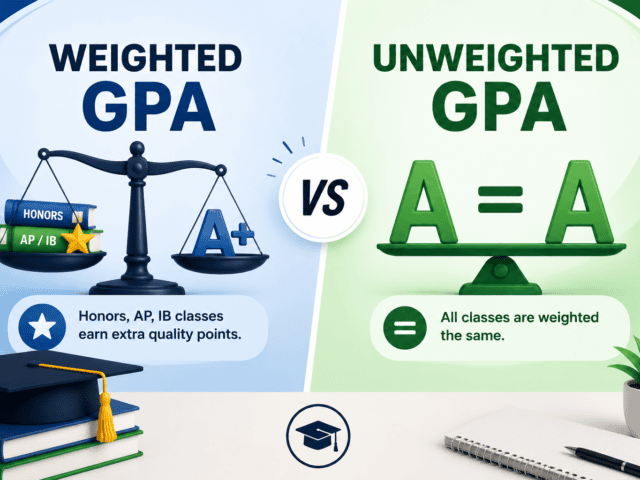
A weighted average across every course you've taken — credit hours determine how much each course counts. B average = 3.0 GPA. This is what colleges, employers, and grad schools look at.
Go Deeper — Guides for Students and Teachers
The tools give you the number. These guides explain what to do with it.
Questions People Ask Us Most
What is 85 out of 100 as a grade?
85 out of 100 is 85% — a B on the US grading scale, equivalent to a 3.0 GPA. The B range runs from 83 to 86%. To reach a B+, you'd need 87% — two more correct answers on a 100-question test.
What is a passing grade in the US?
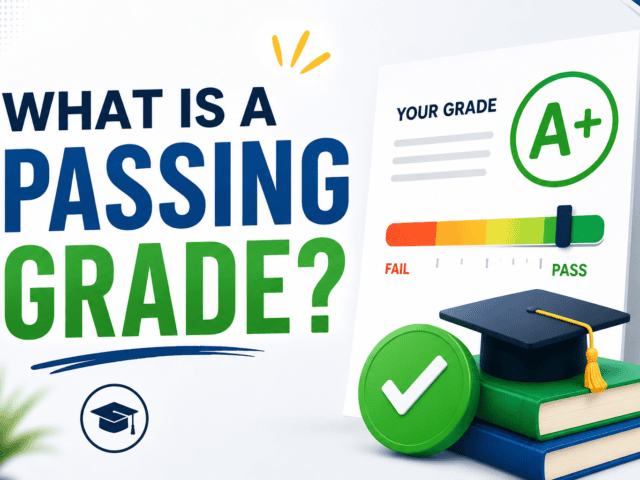
In most US K–12 schools and colleges, 60% (a D) is the minimum passing grade. Many college programs require a C (73%) or higher to receive course credit — particularly in courses required for your major. Medical and law programs typically set the bar at 70–75%. Our tools let you set any custom passing threshold to match your school's actual policy.
What grade is 70 percent?
70% is a C− — a 1.7 GPA. It sits at the very bottom of the average band. While it passes at most schools, you're three percentage points from a C (2.0) and just 10 points from a B−. Small improvements here have a disproportionately large impact on overall GPA.
Can I still pass if I failed one test?
In most cases, yes — it depends on how much the test was weighted and how much graded work remains. Enter your current grade, the failed test weight, and any remaining assignments into the Final Grade Calculator to get the exact number you need on each remaining piece.
What percentage do I need to get an A?
You need 90% or above for an A− or higher. The A range breaks down as: A− (90–92%), A (93–96%), A+ (97–100%). Use the Final Grade Calculator to find out what score you need on your remaining tests to land in the A range.
How do teachers use a grading calculator for a full class stack?
The Easy Grader is the grading calculator for teachers on this site. Enter total questions once. For each paper, add the number wrong — the score updates live. Hit reset for the next paper. It generates a complete score chart for every possible result, so you can grade an entire class without recalculating anything manually. For weighted grading systems, the Weighted Grade Calculator handles category distributions automatically.
Is 80 percent a good grade?
Yes — 80% is a B− (2.7 GPA) and is considered a good grade. The national college GPA average in the US is 3.15, which is roughly 83%. An 80% is close to that average and meets most standard academic requirements. For scholarship applications or graduate program admissions, pushing to 87%+ (B+) significantly improves competitiveness.
What is the difference between semester GPA and cumulative GPA?
Semester GPA covers only the courses from one term and resets each semester. Cumulative GPA is the weighted average of every course you've ever taken — it's what appears on your official transcript. One strong semester moves your cumulative GPA up. One weak semester doesn't destroy it. Use the Cumulative GPA Calculator to see the full picture.
Do these tools work for Pakistan and India grading systems?
Yes. Enter obtained marks and total marks — the percentage and letter grade calculate instantly regardless of your board or institution. For passing percentage, you can set a custom threshold — 33% for Pakistan (Matric/Inter), 33–35% for India (CBSE/State boards). The GPA tool supports the 10.0 scale used by many South Asian universities.
What's the difference between an EZ grader calculator and a regular grade calculator?
A standard grade calculator converts one score at a time — enter marks, get a percentage. An EZ grader calculator (also called a teacher grader, quick grade calculator, or grading calculator for teachers) is built for grading multiple papers in sequence. It generates a full reference chart showing the score for every possible number of wrong answers — so a teacher can grade an entire class without re-entering the total each time. Our Easy Grader does both — single score lookup and full chart — in one free tool.
Every Tool You Need — All Free, All Instant
Students. Teachers. Parents. High school. College.
US, UK, Pakistan, India, Canada, Australia.
Our tools are reviewed for accuracy by educators
and checked against the standard grading scales used by US, UK,CA,
Pakistani, and Indian academic institutions.